You’ve set up your business, your team is assembled, and you’re ready to grow. But many companies hit a wall when they realize their growth is inconsistent. This is often the result of a disconnect between Marketing and Sales; the handoff between departments is unmanaged, leading to lost data or, worse, lost revenue.
This is where “RevOps” (Revenue Operations) comes in. You’ve probably heard of this term before, but it’s more than a buzzword; it represents a practical shift in how businesses operate. It’s the functional alignment of Sales, Marketing, and Customer Success that finally brings predictability into your revenue lifecycle.
Is it Sales? Is it Marketing? It’s Both.
In traditional organizations, Marketing is responsible for lead generation and Sales is responsible for driving revenue from those leads. RevOps is the bridge between them.
By bridging the gap between these two departments: RevOps makes sure Marketing efforts translate directly into predictable Sales outcomes.
RevOps vs. The HubSpot Admin: What's the difference?
Many HubSpot Admins have already been doing “RevOps work” without the official title. They’ve built the workflows, managed the data, while supporting both sales & marketing teams. However, as an organization grows, it becomes critical to distinguish between managing the platform and managing the process.
These responsibilities can often overlap, the following breakdown clarifies how these roles are different:
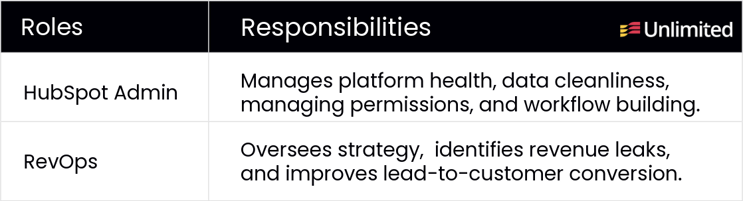
In a smaller team, one person often wears many hats; building the technical solution while also designing the business strategy. As a company scales, separating these roles allows the admins to focus on the platform while RevOps focuses on cross-department alignment.
Moving From Guesswork to Precision
Most companies grow by adding tools one at a time. Eventually, this leads to RevOps tech debt. The accumulation of inefficient, legacy, or hastily implemented systems, automations, and data structures in the CRM that eventually slow growth.
RevOps fixes this by standardizing how teams adopt and integrate technology. This shift toward HubSpot optimization takes the frustration away from your CRM and turns it into a streamlined platform that supports your team’s daily needs.
4 Examples of RevOps in Practice
To understand how RevOps functions as a discipline, look at the four pillars that manage the revenue lifecycle:
1. Operations: The foundation. This involves designing the technical handoffs between Marketing and Sales. This creates a functional feedback loop: Marketing learns which lead data Sales needs to close deals, and Sales learns to trust the insights Marketing provides.
2. Enablement: Providing the team with the training, resources, and hands-on support required to guarantee the the feedback loop is put into practice. So Sales knows how to leverage Marketing’s data to have better prospect conversations.
3. Data Insights: Turning raw data into actionable dashboards. This gives leadership the reliable forecasts and transparency needed to lead with clarity.
4. Tools: They manage your tech stack, including HubSpot optimization and system integration, so your team has the right capabilities without bottlenecks in data flow.
Leave the Guesswork Behind
If your current setup lacks revenue visibility and you need hands-on support, Unlimited Tech Solutions specializes in removing any operational chaos. Our HubSpot experts can guide you on what's working—and what isn’t—so you can finally experience clarity. Whether you need a full audit or tailored integration to bridge the gap between your systems, we make sure your revenue engine runs like a machine.
Ready to see what's actually slowing down your revenue?
Schedule Your Free RevOps Strategy Call Today and get the transparency you need to scale your business with confidence.